Haunting is a phenomenon that seems to lay upon a place in layers, like geologic strata, with the most recent and energetic spirits most likely to interact with their environment in a manner that we humans can detect. Of course human ability to sense such things lays upon a sliding scale. Typically, as the strikingly accurate Handbook For the Recently Deceased from Tim Burton's haunted classic Beetlejuice states, "The living usually won't see the dead." But for the most sensitive people, such as Amy Allan, co-star of Travel Channel's "The Dead Files," many locations harbor spirit activity, and some locales are virtually alive with the dead performing elaborate pantomimes.
Over the last decade or so, with the popularization of ghost hunting TV shows and the broad "normalization of the paranormal," we've seen the emergence of "super haunts": destinations with so much spirit energy that it can be detected regularly by people of average sensitivity and register on ghost hunting equipment.
Savvy entrepreneurs have seized on this trend and market their spooky domains for paranormal tours, investigations, and overnight stays. Paranormal investigators, thrill seekers, and the curious flock to these venues in droves, expressly hoping to make contact with the other side.
But for those seeking a more intimate paranormal experience, one off the beaten and heavily marketed path, there are active properties in virtually every community in the land, hidden local gems full of haunted history and spine-chilling supernatural secrets.
1- The Ohio State Reformatory - Mansfield, Ohio

This gothic castle-like structure was built in 1896 with the noble goal of reforming juvenile and young-adult offenders. As with many best-laid plans, the ideals of the Reformatory gradually gave way to institutional reality, the path to a better life yielding to a warehouse of despair, pain, even death.
Plagued for decades with overcrowding, decay, and explosive violence, the doors to OSR were closed for good in 1990 by a federal order citing "brutalizing and inhumane conditions," but something remained behind. Along with the peeling paint and rusting iron bars, the troubled spirits of forgotten inmates still linger behind its thick stone walls.
Ghosts of angry men physically attack visitors and staff. Eerie whispers echo through the cells blocks, calling by name those who dare climb reverberating metal stairs to its upper tiers. Apparitions of emaciated prisoners flicker in and out of the dark shadows of solitary confinement, tucked deep in the bowels of the building.
And the heartbroken spirit of Helen, wife of a former warden, cries out in her former quarters, her distinctive rose perfume accompanying her presence.
2- Waverly Hills Sanatorium - Louisville, Kentucky

Once the last best hope for those suffering from tuberculosis, aka "The White Plague," this enormous bat-winged shaped building retains the memories and emotions of its former patients and staff. Before the modern age of antibiotics, fresh air and nutrition were the primary treatments for TB. Doctors tried many experimental procedures to help the afflicted, but drastic surgeries often maimed or even killed the patient outright -- another case of best intentions gone awry.
The highly contagious disease could also affect the brain, causing many to go mad. The slow agonizing death suffered by many Waverly's residents left a residue of dark energy to fester in the building. Ghostly forms follow visitors through the narrow corridors. Phantom footsteps and eerie voices echo among the walls of the body chute, aka "the death tunnel," the discrete final exit for many patients.
An entity known as The Creeper climbs the walls and ceilings with its spindly spider-like limbs. Thought to be a harbinger of evil, it moves with unnatural speed, stalking those who roam the creepy, lonely corridors. Originally a place of hope for the afflicted, Waverly Hills is burdened with the weight of thousands of suffering souls.
3- The Trans-Allegheny Lunatic Asylum - Weston, West Virginia

Before 19th century reform revealed mental illness to be a medical condition, asylums were the dumping ground for society's unwanted. Originally a destination of enlightened empathy and treatment, the famed Kirkbride method emphasized institutionalization and an architecture that afforded a pleasant aesthetic, but TALA eventually became just another overcrowded, underfunded warehouse of pain and misery.
When the doors finally closed for good in 1994, the confused spirits of many former patients stayed locked inside. Murders, rapists, and other violent offenders still mix with those who's only crime was depression or substance abuse. Tortured ghosts of those who endured horrific ice-pick lobotomies scream for justice inside the asylum walls. The lingering spirit of a lonely child named Lily is one of TALA's innocent victims. Like a sentinel, she sits patiently in her brightly colored room, waiting for someone to play with her.
Over the last decade or so, with the popularization of ghost hunting TV shows and the broad "normalization of the paranormal," we've seen the emergence of "super haunts": destinations with so much spirit energy that it can be detected regularly by people of average sensitivity and register on ghost hunting equipment.
Savvy entrepreneurs have seized on this trend and market their spooky domains for paranormal tours, investigations, and overnight stays. Paranormal investigators, thrill seekers, and the curious flock to these venues in droves, expressly hoping to make contact with the other side.
But for those seeking a more intimate paranormal experience, one off the beaten and heavily marketed path, there are active properties in virtually every community in the land, hidden local gems full of haunted history and spine-chilling supernatural secrets.
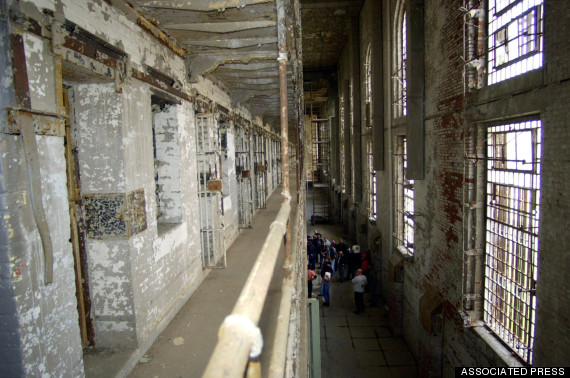
This gothic castle-like structure was built in 1896 with the noble goal of reforming juvenile and young-adult offenders. As with many best-laid plans, the ideals of the Reformatory gradually gave way to institutional reality, the path to a better life yielding to a warehouse of despair, pain, even death.
Plagued for decades with overcrowding, decay, and explosive violence, the doors to OSR were closed for good in 1990 by a federal order citing "brutalizing and inhumane conditions," but something remained behind. Along with the peeling paint and rusting iron bars, the troubled spirits of forgotten inmates still linger behind its thick stone walls.
Ghosts of angry men physically attack visitors and staff. Eerie whispers echo through the cells blocks, calling by name those who dare climb reverberating metal stairs to its upper tiers. Apparitions of emaciated prisoners flicker in and out of the dark shadows of solitary confinement, tucked deep in the bowels of the building.
And the heartbroken spirit of Helen, wife of a former warden, cries out in her former quarters, her distinctive rose perfume accompanying her presence.

Once the last best hope for those suffering from tuberculosis, aka "The White Plague," this enormous bat-winged shaped building retains the memories and emotions of its former patients and staff. Before the modern age of antibiotics, fresh air and nutrition were the primary treatments for TB. Doctors tried many experimental procedures to help the afflicted, but drastic surgeries often maimed or even killed the patient outright -- another case of best intentions gone awry.
The highly contagious disease could also affect the brain, causing many to go mad. The slow agonizing death suffered by many Waverly's residents left a residue of dark energy to fester in the building. Ghostly forms follow visitors through the narrow corridors. Phantom footsteps and eerie voices echo among the walls of the body chute, aka "the death tunnel," the discrete final exit for many patients.
An entity known as The Creeper climbs the walls and ceilings with its spindly spider-like limbs. Thought to be a harbinger of evil, it moves with unnatural speed, stalking those who roam the creepy, lonely corridors. Originally a place of hope for the afflicted, Waverly Hills is burdened with the weight of thousands of suffering souls.

Before 19th century reform revealed mental illness to be a medical condition, asylums were the dumping ground for society's unwanted. Originally a destination of enlightened empathy and treatment, the famed Kirkbride method emphasized institutionalization and an architecture that afforded a pleasant aesthetic, but TALA eventually became just another overcrowded, underfunded warehouse of pain and misery.
When the doors finally closed for good in 1994, the confused spirits of many former patients stayed locked inside. Murders, rapists, and other violent offenders still mix with those who's only crime was depression or substance abuse. Tortured ghosts of those who endured horrific ice-pick lobotomies scream for justice inside the asylum walls. The lingering spirit of a lonely child named Lily is one of TALA's innocent victims. Like a sentinel, she sits patiently in her brightly colored room, waiting for someone to play with her.
Source :Huffingtonpost


Follow Us
Were this world an endless plain, and by sailing eastward we could for ever reach new distances