The Bloodwood Tree

Pterocarpus angolensis is a kind of teak native to southern Africa, known by various names such as Kiaat, Mukwa, and Muninga. It is also called the Bloodwood tree, so named for the tree’s remarkable dark red colored sap. A chopped trunk or or a damaged branch of the tree starts dripping deep red fluid, almost like a severed limb of an animal. The sticky, reddish-brown sap seals the wound to promote healing.

The red sap is used traditionally as a dye and in some areas mixed with animal fat to make a cosmetic for faces and bodies. It is also believed to have magical properties for the curing of problems concerning blood, apparently because of its close resemblance to blood. The tree is also used for treating many medical conditions such as ringworm, stabbing pains, eye problems, malaria, blackwater fever, stomach problems and to increase the supply of breast milk.

Source: Biodiversitymedia.ning.com Nidiosanibruja Soundandfair
The wood makes high-quality furniture, as it can be easily carved, glues and screws well and takes a fine polish. It shrinks very little when drying from the green condition, and this quality, together with its high durability, makes it particularly suitable for boat building, canoes and bathroom floors.

Because of its great value to the indigenous peoples of the central and southern Africa, these trees are being harvested at an unsustainable rate leading to its decline in recent decades.

The Bloodwood tree grows 12 to 18 meters tall, has dark-brown rough bark, a beautiful umbrella-shaped spreading crown and bears yellow flowers.

Source: Amusingplanet

Life on Earth May Have Flourished A Billion Years Earlier Than Originally Thought

More than 3 billion years ago, Earth was a hostile, volatile place, its air oxygen-less and its climate unpredictable.

And yet, life thrived.

That’s according to a study published Monday in the journal Nature, which analyzed 52 ancient rock samples and found that organisms capable of pulling nitrogen from the atmosphere and converting it into a usable form first appeared around 3.2 billion years ago — about a billion years earlier than previous estimates.

Though very early, very basic forms of life are thought to have existed even earlier than the 3.2 billion mark, the new findings push back scientists’ understanding of when life was widespread.

The secret ingredient is a type of nitrogen found in the ancient rock samples. Early life forms may have been able to live without oxygen — which didn’t appear in Earth’s atmosphere until what scientists call a “great oxygenation event” 2.3 billion years ago — but they required nitrogen to build genes and for other essential life processes. And unfortunately for the planet’s ancient organisms, the kind of nitrogen in Earth’s atmosphere exists in tightly bonded pairs that are useless when it comes to chemical reactions.

Non-biological processes, such as lightning discharge, may have converted bonded atmospheric nitrogen in small quantities, but not frequently enough to sustain large populations of living cells. For that, life on Earth needed to find a way to acquire its own nitrogen — an enzyme that could pull the compound from the atmosphere and convert it to its “fixed” or usable form.

Evidence of such an enzyme is what researchers found in their samples, which were sourced from some of Earth’s oldest rock in South Africa and Australia and range from about 2.8 billion to 3.2 billion years old. The rocks contain a chemical signature of the nitrogen-fixing process, offering “hard evidence” that the conditions for life to flourish have existed 50 percent longer than scientists once believed, according to co-author Roger Buick.

“People always had the idea that the really ancient biosphere was just tenuously clinging on to this inhospitable planet, and it wasn’t until the emergence of nitrogen fixation that suddenly the biosphere become large and robust and diverse,” Buick, a professor at the University of Washington, said in a university press release. “Our work shows that there was no nitrogen crisis on the early Earth, and therefore it could have supported a fairly large and diverse biosphere.”

Source: Kanfustudio


Buick said these early organisms could have crawled out of the ocean and lived on land in a single layer of cells, coating the planet’s rocks with a thin film of slime and quietly exhaling small amounts of oxygen. The presence of the chemical signature is indirect evidence of this hypothesis, but it’s firm — the kind of chemical reaction preserved in the rocks can only happen in the presence of life.

Lead author Eva Stueken, also a University of Washington professor,said that the findings suggest it may be easier for complex biological processes to develop than originally thought.

“Imagining that this really complicated process is so old, and has operated in the same way for 3.2 billion years, I think is fascinating,” she said. “It suggests that these really complicated enzymes apparently formed really early, so maybe it’s not so difficult for these enzymes to evolve.”

Source: Washingtonpost

5 Fun Facts About America

Some Americans have trouble remembering the words to the Star Spangled Banner and that is like the most basic American thing to know. It would be asking a little much to have the populace dig deeper and find out more weird things about our country. So sit back and relax, we've done all the research for you and I've provided this neat little compendium of strange but true facts about America. Educate yourself!

1- 1 out of every 8 Americans have been employed by McDonald's at some point.

Source: Politicaloutcast

2- Apple has more money than the U.S. Treasury.

Source: Geekarena

3- In Montana, cows out number people 3 to 1.

Source: Newscientist

4- 1 American consumes the same amount of resources as 32 Kenyans.

Source: Omuindiz

5- It is actually completely legal for underage kids to smoke cigarettes, but it is illegal for them to purchase them.

Source: Wallstreetotc
Source: ViralNova

The 3 Most Haunted Places In America

Haunting is a phenomenon that seems to lay upon a place in layers, like geologic strata, with the most recent and energetic spirits most likely to interact with their environment in a manner that we humans can detect. Of course human ability to sense such things lays upon a sliding scale. Typically, as the strikingly accurate Handbook For the Recently Deceased from Tim Burton's haunted classic Beetlejuice states, "The living usually won't see the dead." But for the most sensitive people, such as Amy Allan, co-star of Travel Channel's "The Dead Files," many locations harbor spirit activity, and some locales are virtually alive with the dead performing elaborate pantomimes.

Over the last decade or so, with the popularization of ghost hunting TV shows and the broad "normalization of the paranormal," we've seen the emergence of "super haunts": destinations with so much spirit energy that it can be detected regularly by people of average sensitivity and register on ghost hunting equipment.

Savvy entrepreneurs have seized on this trend and market their spooky domains for paranormal tours, investigations, and overnight stays. Paranormal investigators, thrill seekers, and the curious flock to these venues in droves, expressly hoping to make contact with the other side.

But for those seeking a more intimate paranormal experience, one off the beaten and heavily marketed path, there are active properties in virtually every community in the land, hidden local gems full of haunted history and spine-chilling supernatural secrets.

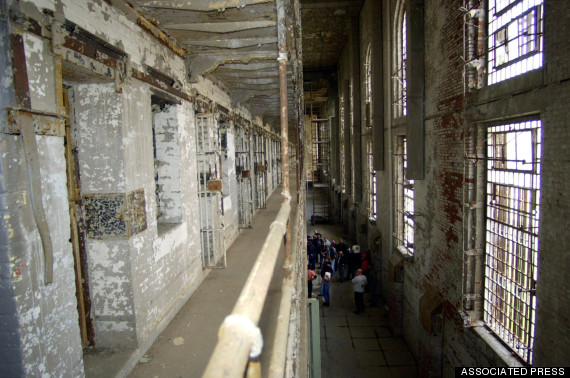
1- The Ohio State Reformatory - Mansfield, Ohio


This gothic castle-like structure was built in 1896 with the noble goal of reforming juvenile and young-adult offenders. As with many best-laid plans, the ideals of the Reformatory gradually gave way to institutional reality, the path to a better life yielding to a warehouse of despair, pain, even death.

Plagued for decades with overcrowding, decay, and explosive violence, the doors to OSR were closed for good in 1990 by a federal order citing "brutalizing and inhumane conditions," but something remained behind. Along with the peeling paint and rusting iron bars, the troubled spirits of forgotten inmates still linger behind its thick stone walls.

Ghosts of angry men physically attack visitors and staff. Eerie whispers echo through the cells blocks, calling by name those who dare climb reverberating metal stairs to its upper tiers. Apparitions of emaciated prisoners flicker in and out of the dark shadows of solitary confinement, tucked deep in the bowels of the building.

And the heartbroken spirit of Helen, wife of a former warden, cries out in her former quarters, her distinctive rose perfume accompanying her presence.

2- Waverly Hills Sanatorium - Louisville, Kentucky


Once the last best hope for those suffering from tuberculosis, aka "The White Plague," this enormous bat-winged shaped building retains the memories and emotions of its former patients and staff. Before the modern age of antibiotics, fresh air and nutrition were the primary treatments for TB. Doctors tried many experimental procedures to help the afflicted, but drastic surgeries often maimed or even killed the patient outright -- another case of best intentions gone awry.

The highly contagious disease could also affect the brain, causing many to go mad. The slow agonizing death suffered by many Waverly's residents left a residue of dark energy to fester in the building. Ghostly forms follow visitors through the narrow corridors. Phantom footsteps and eerie voices echo among the walls of the body chute, aka "the death tunnel," the discrete final exit for many patients.

An entity known as The Creeper climbs the walls and ceilings with its spindly spider-like limbs. Thought to be a harbinger of evil, it moves with unnatural speed, stalking those who roam the creepy, lonely corridors. Originally a place of hope for the afflicted, Waverly Hills is burdened with the weight of thousands of suffering souls.

3- The Trans-Allegheny Lunatic Asylum - Weston, West Virginia


Before 19th century reform revealed mental illness to be a medical condition, asylums were the dumping ground for society's unwanted. Originally a destination of enlightened empathy and treatment, the famed Kirkbride method emphasized institutionalization and an architecture that afforded a pleasant aesthetic, but TALA eventually became just another overcrowded, underfunded warehouse of pain and misery.

When the doors finally closed for good in 1994, the confused spirits of many former patients stayed locked inside. Murders, rapists, and other violent offenders still mix with those who's only crime was depression or substance abuse. Tortured ghosts of those who endured horrific ice-pick lobotomies scream for justice inside the asylum walls. The lingering spirit of a lonely child named Lily is one of TALA's innocent victims. Like a sentinel, she sits patiently in her brightly colored room, waiting for someone to play with her.

6 Weird Things You Never Knew About Kissing

Romantic kissing happens in over 90 percent of all cultures, and with good reason: “It helps us find a partner and stay with them,” says Laura Berman, PhD, assistant clinical professor of ob-gyn and psychiatry at the Feinberg School of Medicine at Northwestern University in Chicago and author of Loving Sex ($25, amazon.com). But it also has a slew of surprising functions, including some major health benefits. Pucker up to these fascinating facts.
Source: iStock
It may be the most fun way to build immunityJust 10 seconds of French kissing can transfer 80 million germs from one person’s mouth to the other, according to a Dutch study published this past November in the journal Microbiome. While that may sound gross, there’s a big potential benefit.

“It’s a way to pass around bugs so your body develops immunity to them,” Berman explained.

In fact, a 2010 paper in the journal Medical Hypotheses suggested that kissing between partners could help protect their babies from being infected in utero with cytomegalovirus, which can cause birth defects such as infant blindness.

It really is ‘in his kiss’Women rate romantic kissing as more important when they’re close to ovulation—in other words, when they’re more likely to get pregnant. This makes sense from an evolutionary perspective, researchers say: Kissing offers a way to assess a mate through taste or smell.

It may boost your libidoWhile both sexes enjoy French kissing with long-term partners, guys “preferred more tongue contact” than women with short-term mates, according to a study published in the journal Evolutionary Psychology in 2007. (The study was done with college students, so you might want to take it with a grain of salt.)

“One theory is that their saliva transfers testosterone to the woman, which in turn increases her sexual desire,” explained Berman.

It boosts happy hormones“When you kiss, your brain releases this chemical that leaves you feeling connected and bonded to your mate,” explained Berman.

It also releases endorphins, those same feel-good chemicals your body produces when you work out. Another relaxing bonus: kissing lowers levels of the stress hormone cortisol, according to a 2009 study done at Lafayette College in Pennsylvania.

It may save your relationshipBoth men and women who report frequent kissing in their relationship report more sexual satisfaction, according to a 2011 Kinsey Institute study. Guys who frequently smooched were also three times happier in their relationship than guys with limited snuggling. (Interestingly, frequent kissing didn’t predict relationship satisfaction for women.)

It can last for days—literallyThe longest kiss award goes to Ekkachai Tiranarat and Laksana Tiranarat, who smooched for 58 hours, 35 minutes and 58 seconds in Pattaya, Thailand, on February 12-14, 2013. They beat out eight other couples who entered the competition. Wonder how much training they had to do to prepare for that one!

Source: Health.Com

Top 5 Ridiculously Common Science Myths

There is nothing better than a bit of mythbusting (which accounts for the popularity of the television program of the same name), so here we are again, presenting you with a new list of terribly common misconceptions and myths – this time about science.

5- Evolutionary Improvements


The Myth: Evolution causes something to go from “lower” to “higher”

While it is a fact that natural selection weeds out unhealthy genes from the gene pool, there are many cases where an imperfect organism has survived. Some examples of this are fungi, sharks, crayfish, and mosses – these have all remained essentially the same over a great period of time. These organisms are all sufficiently adapted to their environment to survive without improvement.
Other taxa have changed a lot, but not necessarily for the better. Some creatures have had their environments changed and their adaptations may not be as well suited to their new situation. Fitness is linked to their environment, not to progress.

4- Humans Pop In Space


The Myth: When exposed to the vacuum of space, the human body pops

This myth is the result of science fiction movies which use it to add excitement or drama to the plot. In fact, a human can survive for 15 – 30 seconds in outer space as long as they breathe out before the exposure (this prevents the lungs from bursting and sending air into the bloodstream). After 15 or so seconds, the lack of oxygen causes unconsciousness which eventually leads to death by asphyxiation.

3- Brightest Star


The Myth: Polaris is the brightest star in the northern hemisphere night sky

Sirius is actually brighter with a magnitude of ?1.47 compared to Polaris’ 1.97 (the lower the number the brighter the star). The importance of Polaris is that its position in the sky marks North – and for that reason it is also called the “North Star”. Polaris is the brightest star in the constellation Ursa Minor and, interestingly, is only the current North Star as pole stars change over time because stars exhibit a slow continuous drift with respect to the Earth’s axis.

2- Five Second Rule


The Myth: Food that drops on the floor is safe to eat if you pick it up within five seconds

This is utter bunkum which should be obvious to most readers. If there are germs on the floor and the food lands on them, they will immediately stick to the food. Having said that, eating germs and dirt is not always a bad thing as it helps us to develop a robust immune system. I prefer to have a “how-tasty-is-it” rule: if it is something really tasty, it can sit there for ten minutes for all I care – I will still eat it.

1- Dark side of the Moon


The Myth: There is a dark side of the moon

Actually – every part of the moon is illuminated at sometime by the sun. This misconception has come about because there is a side of the moon which is never visible to the earth. This is due to tidal locking; this is due to the fact that Earth’s gravitational pull on the moon is so immense that it can only show one face to us. Wikipedia puts it rather smartly thus: “Tidal locking occurs when the gravitational gradient makes one side of an astronomical body always face another; for example, one side of the Earth’s Moon always faces the Earth. A tidally locked body takes just as long to rotate around its own axis as it does to revolve around its partner. This synchronous rotation causes one hemisphere constantly to face the partner body.”

Source: Listverse